It is not difficult to understand why the imposing Cathedral of Albi in the French Occitanie region is probably the most visited cathedral in the world.
It has retained all of its splendour and colours over the centuries which is in real contrast with the unusual brick building itself.
We had a bit of spare time in the town yesterday and took the opportunity to visit it.
I was surprised and fairly happy to see that the BMW car we tested was actually carrying the famous BMW Sport Pack logo.
I did not try to unleash the obvious large amount of horse power during the test drive but look forward to it when we pick up the car, which has now been purchased, next week.
Stéphane Bancel, the French CEO of Moderna, told the Journal du dimanche about his strategy for fighting Covid-19 in the coming months. On the one hand, he wants to vaccinate teenagers this summer and administer a third dose to people at risk in the autumn.
▫️ INCIDENCE RATE
Last evening, the incidence rate in the Aude departement was 69,22. Let us hope this long bank holiday weekend and the thousands of tourists which have invaded the town will not reverse the situation.
▫️ Blue Flag Award 2021
Occitanie first region in France for the quality of its beaches and ports
With 109 beaches and 21 marinas, Occitania is the first region in France in terms of the number of beaches and marinas with the Blue Flag label. These continental and coastal beaches and harbours meet the 60 criteria required by the label.
The Blue Flag is a sustainable tourism label awarded each year to marinas and municipalities for their beaches, which implement, on a permanent basis, a tourism policy that respects the environment and human beings.
Once again, the Blue Flag has achieved a record number of awards with 525 sites in France, including 410 beaches in 196 municipalities and 115 marinas. In 2021, 34 new laureates, 24 municipalities and 10 marinas, will enter the list.
With 109 beaches and 21 marinas, Occitania is the leading region in France in terms of the number of beaches and marinas awarded the Blue Flag. With a special mention for the Hérault, which has the highest number of Blue Flag sites in the region, with 44 sites in total. Then comes the Pyrénnées-Orientales with 30.
The Blue Flag is for the inhabitants of a municipality, and for tourists, the assurance of being able to spend a summer with their feet in clean water, or in an environmentally friendly port. Each year, the municipalities that apply for the label must meet specific criteria of cleanliness, facilities, reception and information for the public, and respect for biodiversity to receive the label.
Last year, the municipality of Marseillan lost its Pavillon Bleu due to technical problems, particularly with the first aid posts. This year, it has been awarded the label and is delighted.
▫️ TRAVEL (🔸 = NEW)
🔸 21/05: Spain has announced that it will let in all vaccinated people, regardless of their country of origin, from 7 June. It is not yet clear whether this means that vaccinated people will be able to enter without a PCR test. 🔸 21/05: US land borders with Canada and Mexico will remain closed until at least 21 June. 🔸 21/05: Panama temporarily closes its land border with Colombia. 🔸 21/05: Belize will reopen its land and sea borders with Guatemala and Mexico on 31 May. 🔸 21/05: France is now considered a risk country by Zambia, which implies an additional test on arrival and a 14-day quarantine. 🔸 21/05: MEPs and Member States reached an agreement on the European Health Pass, which should come into force from 1 July. The document will contain a QR code indicating that the holder has been vaccinated, has had a negative PCR or rapid antigen test or is immune after being infected with Covid-19. It will be available on smartphones as well as in paper form.
🔸 20/05 : All flights to Sri Lanka are suspended from 21 to 31 May. 🔸 20/05: Colombia has reopened its land borders. 🔸 20/05: Flights to Bangladesh have resumed, but a fourteen-day stay in a government-approved hotel is required. 🔸 20/05 : Vaccines are effective against all variants of the virus according to WHO. 🔸 20/05 : Since 19 May, you no longer need a compelling reason to travel to Saint-Barthélemy and Saint-Pierre et Miquelon. However, a PCR test less than 72 hours old and a 7-day quarantine are still required. 20/05: As of 9 June, you will no longer need a compelling reason to travel to Guadeloupe, Martinique and Saint-Martin. For Reunion, Mayotte and Polynesia, the lifting of compelling reasons only concerns people vaccinated with two doses. 20/05: In French Guiana, the lifting of compelling reasons is not on the agenda. For New Caledonia, the local government has decided to limit regular flights and to maintain the compelling reasons at least until 30 October.
19/05: Denmark has reopened its borders. 19/05 : Thailand: Phuket confirms it will reopen to vaccinated foreign tourists on 1 July. 18/05 : Austria to lift quarantine requirement on 19 May.
16/05 : Algeria to gradually reopen its borders from early June. 16/05 : Italy has ended its quarantine for European tourists. 16/05: From Monday 17 May, people coming from France will no longer have to undergo quarantine when arriving in Portugal.
14/05: Vaccinated people no longer need a PCR test to enter Greece. 14/05: People who have been vaccinated or have had covid no longer need a PCR test to enter Germany. 14/05:France’s border reopening strategy has been published:
“Within the European Union, travel facilitated by the health pass To travel within the European Union, it is currently not necessary to justify the reason for travel, but prior testing obligations (-72h) are required.
The government is working with the other Member States on a “green pass” to support the resumption of tourism and facilitate border crossings through common standards.
While the test is already an element of proof used, this “green pass” will enable travellers to show that they have been fully vaccinated at border controls.
For travellers entering France from outside the European Union, tourist flows will be reopened from 9 June depending on the health situation in these countries. France will have a policy of controlling entry to its territory that is proportionate to the health situation in each third country, in accordance with a vision shared with the other Member States of the European Union.
For countries in which the virus is not actively circulating, and in which no variants of concern have been identified (“green countries”), flows may be resumed under much more flexible arrangements.
For countries where the virus is actively circulating but in controlled proportions, and without the spread of variants of concern (“orange countries”), the conditions for entry into France will be more restrictive, particularly for unvaccinated travellers.
Finally, a European emergency mechanism will aim to establish a list of “red countries” for which drastic measures will be implemented, in view of the epidemic circulation in these countries, as well as the presence of variants of concern: strict limitation of people authorised to travel, tests on boarding and arrival, strictly controlled isolation and quarantine measures.
Pending European harmonisation of the criteria for classifying “red countries”, and in order to protect the French without delay, France has already put in place these drastic measures for incoming flows from the following countries: Argentina, Bangladesh, Brazil, Chile, India, Nepal, Pakistan, Qatar, South Africa, Sri Lanka, Turkey, United Arab Emirates (list as of 10 May 2021).
For EU citizens wishing to travel outside the European Union, it is necessary to find out in advance about the entry restrictions and health situation in the destination country.
Travel conditions will depend on the entry restrictions applied by each country.
It is still not advisable to travel to “orange countries” and it is strongly recommended not to travel to “red countries”.
12/05: Reopening of borders: France expects reciprocity from the United States. 12/05 : The suspension of international flights to and from Nepal is extended at least until 31 May. 12/05: Self-tests are now accepted to enter the United States. However, you still need to have spent at least 14 days outside the Schengen area to enter the country. 11/05: Thailand may fully reopen its borders by 1 January 2022.
10/05: Fully vaccinated persons are now exempt from PCR testing to enter Cyprus. 10/05:Morocco has extended the state of health emergency until 10 June. 10/05: Travellers from 12 countries will be able to travel to England without quarantine from 17 May, but France is not one of them. 10/05:French Polynesia will not open to travellers from mainland France without compelling reasons until July. 10/05:Tunisia has put in place a new general lockdown from 9 to 16 May. 07/05: The quarantine requirement for entry into France has been extended to seven additional countries: Bangladesh, Sri Lanka, Pakistan, Nepal, United Arab Emirates, Turkey and Qatar. For these countries, a PCR test of 36 hours (instead of 72 hours) or a negative PCR test of less than 72 hours accompanied by a negative antigen test of less than 24 hours is now required. 07/05:Australia‘s borders may not fully reopen until mid to late 2022.
▫️ NEWS FROM ACROSS THE POND 🇺🇸
▫️ MUSIC
I have one again managed to avoid watching this yearly horror show. I simply loathe that program.
No further comment
🎶 / 🎶 / 🎶
▫️ FOOD & DRINKS
Four of us went to “Florida Blanca” yesterday for lunch. I have to say it was excellent yet again. What a pleasure it is to be able to go restaurants again.
▫️ THE FABULOUS FRIDAY (FUNNIES) GROANS from Paul
G’day from a new vantage point this week…
◼︎ A new teacher was trying to make use of her psychology courses. She started her class by saying, “Everyone who thinks they’re, stand up!” After a few seconds, Little Larry stood up. The teacher said, “Do you think you’re stupid, Larry?” “No, ma’am, but I hate to see you standing there all by yourself!”
◼︎ She hurried to the pharmacy to get medication, got back to her car and found that she had locked her keys inside. The woman found an old rusty coat hanger left on the ground. She looked at it and said, “I don’t know how to use this.” She bowed her head and asked God to send her some HELP. Within 5 minutes a beat-up old motorcycle pulled up, driven by a bearded man who was wearing an old biker skull rag. He got off of his cycle and asked if he could help. She said: “Yes, my daughter is sick. I’ve locked my keys in my car. I must get home. Please, can you use this hanger to unlock my car?” He said, “Sure.” He walked over to the car, and in less than a minute the car was open. She hugged the man and through tears said, “Thank You SO Much! You are a very nice man.” The man replied, “Lady, I am NOT a nice man. I just got out of PRISON yesterday; I was in prison for car theft. The woman hugged the man again sobbing, “Oh, thank you, God! You even sent me a Professional!”
◼︎ Q: What do you give a pony with a cold?
A: Cough Stirrup!
(Is that because it’s a little hoarse?)
◼︎ I have a response to one of the jokes.
“How come when you mix water and flour together you get glue… and then you add eggs and sugar and you get cake? Where does the glue go?” — Rita Rudner
Answer: On the hips and thighs
◼︎ I used to eat a lot of natural foods until I learned that most people die of natural causes.
◼︎ All of us could take a lesson from the weather. It pays no attention to criticism.
◼︎ The jockey was riding the favorite at a race meeting, and was well ahead of the field. His horse rounded the final corner, when suddenly the jockey was hit on the head by a turkey and a string of sausages. He managed to keep control of his mount and pulled back into the lead, only to be struck by a box of Christmas crackers and a dozen mince pies as he went over the last fence. With great skill he managed to steer the horse to the front of the field once more when, on the run in, he was struck on the head by a bottle of sherry and a Christmas pudding. Thus distracted, he succeeded in coming only second. He immediately went to the race stewards to complain that he had been seriously hampered.
◼︎ “I want to have children, but my friends scare me. One of my friends told me she was in labor for thirty-six hours. I don’t even want to do anything that feels good for thirty-six hours.” – Rita Rudner
◼︎ If it weren’t for the fact that the TV set and the refrigerator are so far apart, some of us wouldn’t get any exercise at all.
∙Why did the chicken cross the road? Because the chicken behind it didn’t know how to socially distance properly.
∙Two grandmothers were bragging about their precious darlings. One of them says to the other, “Mine are so good at social distancing, they won’t even call me.”
∙Who’s idea was it to sing “Happy Birthday” while washing your hands? Now every time I go to the bathroom, my kids expect me to walk out with a cake.
∙My husband purchased a world map and then gave me a dart and said, “Throw this and wherever it lands—that’s where I’m taking you when this pandemic ends.” Turns out, we’re spending two weeks behind the fridge.
∙Ran out of toilet paper and started using lettuce leaves. Today was just the tip of the iceberg, tomorrow romaines to be seen.
∙My mom always told me I wouldn’t accomplish anything by lying in bed all day. But look at me now, ma! I’m saving the world!
∙After years of wanting to thoroughly clean my house but lacking the time, this week I discovered that wasn’t the reason.
∙If I keep stress-eating at this level, the buttons on my shirt will start socially distancing from each other.
∙Every few days try your jeans on just to make sure they fit. Pyjamas will have you believe all is well in the kingdom.
∙Yesterday I ran out of soap and body wash and all I could find was dish detergent. Then it Dawned on me.
∙Being quarantined with a talkative child is like having an insane parrot glued to your shoulder
∙I never thought the comment “I wouldn’t touch them with a six-foot pole” would become a national policy, but here we are!
∙The World Health Organization announced that dogs cannot contract COVID-19. Dogs previously held in quarantine can now be released. To be clear, WHO let the dogs out.
∙Since we’re all in quarantine I guess we’ll be making only inside jokes from now on.
∙I’m not talking to myself, I’m having a parent-teacher conference.
∙This morning I saw a neighbour talking to her cat. It was obvious she thought her cat understood her. I came into my house, told my dog–we laughed a lot.
∙Nothing like relaxing on the couch after a long day of being tense on the couch.
∙Pollen still coming out during a global pandemic? Bitch read the room.
∙ Knock knock. Who is there? Seriously, don’t touch my door and get back 6 meters to social distance.
∙ Day 121 at home and the dog is looking at me like, “See? This is why I chew the furniture!
∙”If you bought 144 rolls of toilet paper in preparation for a 14-day quarantine, you probably should have been seeing a doctor long before coronavirus.
∙How did the health experts lie? They said a mask and gloves was enough to go to the grocery store. When I got there, everyone else had clothes on.
∙Quarantine has really put a damper on comedy. For months nobody has walked into a bar.
◼︎ The family of a deceased businessman was awaiting the reading of the will. “To my loving wife Rose,” the lawyer read, “who stood by me in the rough times as well as the good, I leave the house and $2 million”. “To my daughter Jessica, who looked after me in illness and kept the business going, I leave the yacht, the business and $1 million.” “And to my cousin Dan, who hated me and thought I would not remember him in my will, you were wrong: Hello, Dan!”
◼︎ And a few short one to round out the week.
∙ A man in an interrogation room says, “I’m not saying a word without my lawyer present.” One of the cops replies, “You are the lawyer.” The lawyer says, “Exactly, so where’s my present?”
∙I told my niece that I saw a deer on the way to work this morning. She said, “How do you know it was on it’s way to work?”
∙Did you hear about this new restaurant called Karma? There’s no menu. You get what you deserve.
∙My dentist told me, “This might hurt a little bit. Are you ready?” I said, “Yes, I’m ready.” He said, “I’m sleeping with your wife.”
∙My wife dated a clown before she started going out with me.I had some pretty big shoes to fill.
∙My wife said to me this morning, “What would you do if I won the lottery?” I said, “I’d take my half and leave you.” She said, “Great! I won $12 yesterday, here’s your $6. Stay in touch.”
The post lady, a new one, delivered this one a couple of days ago.
Courage Compétition 🇫🇷 was a racing team and chassis constructor company now owned by Oreca, based in Le Mans near the famous Circuit de la Sarthe. It was founded by Yves Courage, a French race driver who ran hillclimbs before founding the company. Following the purchase of Courage by Oreca in 2007, Yves Courage has re-founded the company as Courage Technology in 2010, attempting to develop electric racing cars.
A must car in my collection of French cars which took part in the Le Mans 24h over the years
The situation of the epidemic in the Aude, the Pyrénées-Orientales and in the region on Thursday according to the figures of Santé publique France.
In the Aude, this Thursday evening, 97 patients are hospitalised (-2 in 24 hours): 45 in conventional hospitalisation (as much as Wednesday), 10 in intensive care (a stable number compared to Wednesday), 45 in follow-up care or long-term care and 1 in other structures. One additional death was recorded on Thursday. In total, 357 people have died from Covid in the department.
In the Pyrénées-Orientales, 133 patients are hospitalised this Thursday evening (-3 in 24 hours): 61 in conventional hospitalisation (-4), 17 in intensive care (+1 compared to Wednesday), 53 in follow-up or long-term care and 2 in other structures. No additional deaths are to be reported in the Pyrénées-Orientales on Thursday. The department counts 313 victims of Covid.
In the Occitanie region, this Thursday evening, 1,148 people are hospitalised because of Covid (-55 in 24 hours): 506 in conventional hospitalisation (-45), 219 in intensive care (7 less than Wednesday), 411 in follow-up or long-term care (9 less than Wednesday) and 12 in other sectors. In total, 4,432 inhabitants of the Occitanie region have died from Covid-19, including 8 in the last 24 hours.
▫️ INCIDENCE RATE
Another significant drop of the Incidence Rate in the Aude departement.
It now stands at 76,2
▫️ INFORMATION
In this period of tax declarations, the Directorate General of Public Finances (DGFiP) is warning people to beware of identity theft scams. Beware, these are phishing attempts. Be careful, these e-mails do not come from the DGFiP and you should not respond to them under any circumstances.
Most of these attempts concern :
▪︎ bank card fraud with the promise of a tax refund (example of a fraudulent e-mail: “we announce that you are eligible to receive a refund of €490 from the Direction générale des Finances publiques on the card registered in your customer area” – a reference number beginning with GOUV is even indicated; ▪︎ calls to overtaxed numbers (some websites refer to overtaxed numbers such as 0 899… or 0 891… to reach public finance centres); ▪︎ fake transfer order scams carried out by mail, telephone or e-mail, sometimes with fake forms attached and usurping the DGFiP’s e-mail addresses (companies are particularly targeted, by getting an employee to make a bank transfer to a fraudulent account, by usurping the identity of the real creditor);
These are fraudulent manoeuvres to induce you to provide personal data (bank details, proof of identity or residence). In general, beware when you receive an e-mail message where the sender :
▪︎ asks you for money or offers to pay you back a sum of money ; ▪︎ seeks to collect personal information (bank details, civil status, etc.).
The services of the Directorate-General of Public Finances never ask for bank details or personal information by e-mail or telephone.
If you have any doubts about the origin of the messages you receive, do not reply to the e-mails and destroy them immediately. If you have already responded to a fraudulent message by giving your bank details, you should first contact your bank to stop the transaction.
For any information or to report an attempted scam:
by internet on ” internet-signalement.gouv.fr ” ; by telephone via the freephone number set up by the government: 0 805 805 817.
▫️ TRAVEL (🔸 = NEW) – From France point of view.
🔸 19/05 As of 9 June, you will no longer need a compelling reason to travel to Guadeloupe, Martinique or Reunion. 🔸 19/05Denmark has reopened its borders. 🔸 19/05Thailand: Phuket confirms its reopening to vaccinated foreign tourists on July 1st 🔸 18/05Austria to lift quarantine requirement on 19 May. 16/05Algeria to gradually reopen its borders from early June. 16/05Italy has ended its quarantine for European tourists. 16/05 From Monday 17 May, people coming from France will no longer have to undergo quarantine when arriving in Portugal. 14/05 Compulsory quarantine for entering France extended to Colombia, Uruguay, Costa Rica and Bahrain. 14/05 Vaccinated people no longer need a PCR test to enter Greece. 14/05 People who have been vaccinated or have had covid no longer need a PCR test to enter Germany.
▫️ SATIRE
▫️ FUN
▫️ NEWS FROM ACROSS THE POND 🇺🇸
▫️ FUN FACTS
You can’t find anything on Earth much hardier than an insect. Insects have managed to survive all five mass extinctions occurring in the last 500 years that wiped out many other species. The Permian-Triassic — the “Great Dying” that occurred some 252 million years ago — is the only mass extinction that wiped out large numbers of insect species. Dinosaurs appeared after that, about 240 million years ago. They ruled the earth until the most recent extinction event 65 million years ago wiped all of them out except the bird-like ones. The earliest known mammals appeared about 210 million years ago.
Yet before dinosaurs roamed the Earth, and the first mammals appeared, a plant was growing in Gondwana, a huge continent in the Southern Hemisphere. Almost 280 million years later — in what is now Brazil — scientists have identified the fossil remains of that plant. It’s an early member of a lineage called cycads, or cycadales, that continues to this day. Cycadales are seed plants, typically with a palmlike crown of large, stiff evergreen leaves and a stout, woody trunk. They’re not real palms, because they don’t produce flowers or fruit. Their fossil history is much older than that of flowering plants.
The discovery of a 280 million year old fossil cycadale is significant because it expands scientific understanding of the resilience of these plants, which we now know persisted through two mass extinctions when most life was killed off the planet. “The vegetative anatomy of this plant is remarkably similar to the ones that live today,” said the lead author of a paper describing the fossil in the journal Review of Palaeobotany and Palynology. “If you cut with a machete a cycadale today you will see the same anatomical pattern that you can see in our fossil.”
Cycadales are often called “living fossils,” much like present-day coelacanth fish, which retain many of the same characteristics as ancestral fish from hundreds of millions of years ago. Some 350 species of cycadales exist today, including the lovely Sago palm, an ornamental plant that looks like a small palm tree. It’s good to know cycadales weren’t just dinosaur food. (National Geographic, NYT, Science Direct)
▫️ WEATHER
Very pleasant despite a few clouds. Will lounge by the pool I guess/
We made the most of yesterday’s 1st de-confinement day and chose to head for the seaside. I love our South of France large and empty sandy beaches. In the background the Pyrenean mountain range and therefore Spain.
It was nice to be able to walk into a beach restaurant which finally were allowed to open.
And despite the strong wind, this one is particularly nice.
For a 1st day of operation, the welcoming and the service was very good. The food was good as well but I thought the dishes could have been a bit more copius. We did mention it to the manager.
But the main point of the day was to meet up with friends, that we did. Did I mention the rosé tasted good?
Carcassonne’s mayor Gérard Larrat has presented the 2021 edition, which will take place from 5 to 31 July at the Château Comtal and the Jean-Deschamps theatre. While the municipality will continue to organise the Cultural Encounters from 10 July to 7 August for smaller shows in the city, the Off Festival, the Fireworks on July 14th and the Feria at the end of August have been cancelled due to health constraints.
▫️ INFORMATION
Here is an article / interview published by L’Express magazine which I found quite interesting. It reflects pretty well my views. I have therefore translated and posted it.
▼
Since Emmanuel Macron asked him last June to “draw lessons” from the French management of the health crisis, he has had to delegate to his deputy the direction of his infection prevention and control service at the University Hospitals of Geneva. Co-inventor of the now famous hydroalcoholic gel, Prof. Didier Pittet went back and forth between Switzerland and France to preside over the independent national mission on the evaluation of the management of the Covid-19 crisis and on the anticipation of pandemic risks. The mission, composed of five experts, is today publishing its work in the form of a 180-page final report full of international comparisons. In an extensive interview with L’Express, the Swiss infectious disease specialist and epidemiologist points out the weaknesses, but also praises the French adaptations during the first two waves of the epidemic. If our country failed in its preparation for the pandemic as well as in the logistics of the vaccination campaign, according to him, it was able to “improve its management over the months”. Didier Pittet also makes proposals for structural improvements to French public health. Some will accuse him of complacency towards his sponsor Emmanuel Macron, while others will say that it sometimes takes a foreign perspective to see that we have not done everything wrong…
🔹 L’Express:In your report, you distinguish three categories of countries. Those spared by Covid, with a health record and little or no economic losses, such as Asian nations or those in Oceania. Those affected by the crisis, but with limited health and economic losses in international comparison, such as Norway. And then the countries very affected by the crisis, with a heavy health and economic toll, such as France…
🔸 Didier Pittet: Yes, but even among the highly affected countries, not all were affected in the same way. We were not equal in the face of the first wave. It is very important to realise that the differences in mortality between European countries are essentially explained by the difference caused by the initial shock. From March 2020 onwards, Italy, France, Spain and Belgium were the most strongly affected by the epidemic. The United Kingdom too, with the particularity of having wanted to “let the virus run” at the very beginning, which meant that it paid more heavily in terms of mortality, even though it had a little more time. In contrast, the Eastern European countries, but also part of Germany, were spared the first wave. Then, in the autumn of 2020, there was a much more widespread and uniform second wave. Germany was much less affected, as were Switzerland and the Eastern European countries.
A special case is Sweden, which has let the virus go. Although the Swedes were not inactive, they were much less restrictive than in Norway, Denmark or Finland. The result: in the first wave, Sweden suffered an economic downturn as severe as Denmark, Finland or Norway, but with eight times as many deaths. In the second wave, Sweden ended up doing what the other countries did, which allowed it to correct this excess mortality.
➿➿➿
🔹 Much has been said about the differences between France and Germany, long presented as a “model”. But your report reminds us that the difference in mortality between European countries is essentially due to the first wave…
🔸 For the second wave, which was much less well managed in Germany, there was disorganisation, probably linked to federalism, as in Switzerland. The obligation to find a compromise with the Länder or the cantons delayed decision-making in these countries, and we saw aberrations. When Geneva closed its restaurants and non-essential shops, the people of Geneva could go to the canton of Vaud, 60 kilometres away, to do their shopping. It was a general mess, including traffic jams on the motorway on Saturdays, which illustrated the limits of this decentralisation. In Switzerland, it was the health ministers themselves who asked the Federal Council to take over governance.
In France, on the other hand, you have learned during this crisis to territorialise decisions in a way that I find exemplary. We can always discuss the details. But by basing yourselves on indicators, you have managed to achieve decentralised management of the crisis, while maintaining the centralisation of important decisions, something that federal states such as Germany have found difficult to impose.
In our report, we compare centralised countries with decentralised countries. But we also compare ‘test, trace and isolate’ with some so-called model countries such as South Korea or Singapore. South Korea, marked by the MERS epidemic in 2015, did not want to take any risks and used an intrusive policy in terms of tracing. There, even cameras in supermarkets can be used to trace transmission chains. And your neighbours will report you to the police if you don’t respect the isolation. You can imagine that this is not the case in Europe…
➿➿➿
🔹 You analyse the different phases of the crisis. As regards the level of preparation for a pandemic, you emphasise without surprise that it was clearly insufficient in France…
🔸 This is the big problem at the beginning, but it goes back more than ten years as far as masks are concerned. There was a problem of doctrine: who should keep what type of mask and how many? Then there was a storage problem, with part of the reserves necessarily perishable. This management was entrusted to Santé publique France, even though it is not an agency designed to handle logistics. Result: as soon as there was a significant need for masks, we realised that part of it was out of date.
As far as the tests are concerned, there have also been errors of doctrine in France. At first, we said we had to develop serological tests, whereas the most important thing was to do PCR tests for diagnosis. Christan Drosten, a German virologist specialising in coronaviruses, was the first to develop a test in January 2020, but the Pasteur Institute quickly followed him. On the other hand, France was faced with a structural defect in medical biology. Germany has a highly concentrated and ‘industrialised’ private sector, which is well equipped in molecular biology, unlike the French private sector, which is not very involved in molecular biology examinations carried out almost exclusively in hospitals. Germany was thus able to carry out 100 000 tests per week from the beginning of March 2020, compared with 13 000 in France. But in the first decontamination phase, France achieved a spectacular roll-out, to the extent that by mid-summer it was the country that was testing the most. With some collateral damage, the laboratories had difficulty in prioritising between people coming to be tested for symptoms and others. This meant that results could take more than 24 or 48 hours. It took time to get started, but today the organisation is remarkable. In France, we are able to carry out large-scale tests and identify variants. It should also be pointed out that in France, these tests are free, whereas in Switzerland, for example, we fought for months to achieve this. I congratulate you on this. Where there are still shortcomings is in the field epidemiology, with the understanding of clusters. But this is a difficulty for all countries in the world.
➿➿➿
🔹 But in the summer of 2020, we failed to control the epidemic when the virus circulation was low. Could we have done better?
🔸 Let’s be clear. Every country in Europe failed to control the circulation of the virus last summer. Everyone wanted to go on holiday. So the virus became hyper-endemic during that period, which many scientists feared. In September 2020, there was a cold snap with an exponential resumption of the epidemic…
“I welcome the French decision to keep schools open”.
As regards the second containment in France, your mission considers that it was “better calibrated” than the first, but late…
In the autumn, everyone in Europe was surprised to have such a high circulation rate and ended up imposing restrictions. France reacted relatively quickly with the curfew decision. It was reactive.
On the other hand, France also quickly decided to keep schools open. Personally, I welcome this decision. Because poor Italian children could have gone more than 12 months without going to school. In Germany, schools remained closed for several months and reopened in a scattered manner. Today we are not in a position to measure the impact of these school closures. But in the first wave, we could see the social consequences.
Of course, the virus is transmitted in schools. But infected children have an extremely low chance of developing a serious inflammatory disease. This is such a tiny proportion that it seems ridiculous to me to close the schools. France has made an intelligent and strong choice in this matter, because closing schools is likely to be very costly from a social point of view.
➿➿➿
🔹 You also highlight the delay in the vaccination campaign. Has France been too cautious, taking into account the lack of confidence in vaccines among a part of its public opinion?
🔸 France was too cautious at the beginning of the campaign. But let’s not forget that the main problem with vaccination was the lack of doses. It was the same in all the European countries that showed solidarity. Furthermore, the option taken in France to protect people in old people’s homes first was the right one, because in terms of excess mortality by age category, people over 85 were by far the most affected category.
In the appendices of the report, we make an international comparison. We can see that there is no excess mortality in countries such as Australia, South Korea or Taiwan, which is not surprising, because there were very few cases. Sweden, on the other hand, has paid heavily for its policy choices, with a big difference from its Scandinavian neighbours. Eastern European countries did not suffer during the first wave, but much more so with the second. France was much better at protecting its population during the second wave, and we can see that Germany managed it much less well. The United States had a real tragedy, with excess mortality not only in the over-65 age group, but also in the 15-64 age group. This is also the case in Spain, Italy, Belgium and the United Kingdom, but not in France.
➿➿➿
🔹 Your report does not mention the controversial management of the third wave…
🔸 Emmanuel Macron asked us to submit the report for the World Health Assembly, which starts on 24 May. So we had to finalise the report in March. But we could redo a health analysis for the third wave at a distance this summer, for example.
As far as the current management is concerned, the French situation is similar to what is done in all the other countries, with a decontamination plan in stages, which can be revised from one territory to another according to the epidemiological data. We are all making progress on a daily basis.
➿➿➿
🔹 “Public health in France is not what it should be. The report makes forty proposals, notably centred on the idea of public health. Why is this so?
🔸 This is the main message of our report. Public health in France is not what it should be in a nation like yours. You have brilliant scientists, but this crisis has underlined the too marginal place of public health in society in general, and more particularly in the practice of health professionals and in research. It must be made more attractive. Many young people who finish their medical studies want to become surgeons or have an academic career, but very few say to themselves “I have a public health soul”. This field is often perceived as being humanitarian. Yet the fight against obesity, hypertension or health injustices is very important.
The United States has the most expensive health system in the world as a percentage of GDP. And yet public management during the Covid crisis was catastrophic. Because there were bad decisions made by Donald Trump, but also because public health was not ready to respond to this crisis. We see that good political decisions and real public health often go hand in hand. In the United States, statistics have shown that obese people and people of colour have died in greater numbers, which is a great injustice. In France, we have also seen that Seine-Saint-Denis has an excess of mortality.
➿➿➿
🔹 In particular, you recommend a reform of scientific expertise, with the Haut Conseil de Santé Publique (HCSP) being attached to the Haute Autorité de Santé (HAS) or the “refocusing” of Santé publique France…
🔸 We have to ask ourselves how, when France has the means at its disposal, we can get everyone to work together so that it is useful for centralised health management, but also for research and the academic world. Perhaps some of the agencies’ missions should be reviewed in order to optimise all of this within a true public health vision. By promoting the independence of these agencies, we have perhaps cut back too much on the Ministry of Health. There were not enough connections with the ministry or between them. Santé publique France has done some wonderful work during this crisis. We need to strengthen its resources, but also to put all this back into the service of real French public health.
In conclusion, we can say that your mission points out errors and shortcomings, but also underlines the fact that France’s management was not catastrophic in comparison with other countries…
Some things could have been managed more quickly, but that is the way it is everywhere. France is characterised by an adaptation of strategy that has been almost permanent. Probably because the executive has been constantly at the bedside of this crisis. Some have criticised the fact that the indicators change regularly, but it is precisely the nature of intervention epidemiology to adapt. That is our job.
And it should be remembered that this was the first time that modern states had carried out containment. Nobody had the recipe. I worked on the first decontainment in Switzerland, and I can tell you that there was no plan available anywhere, neither at the WHO nor elsewhere. So we have to be very humble and modest in realising what we have experienced. Not since the Spanish flu have we experienced such an epidemic. With Covid-19, there are at least 1,200 deaths per million inhabitants in France, compared to 450 for the Asian flu, 600 for the Hong Kong flu or 240 for the 2003 heat wave. And we are not finished yet. For a hundred years, the world has not experienced such a health crisis in terms of deaths, but also of economic and social consequences. In 2008, following the financial crisis, GDPs did not fall by more than 2%. Here in Spain, it has fallen by more than 12%. There is no comparison. No head of state or minister of health in any country in the world has ever been exposed to such a phenomenon.
➿➿➿
🔹 You will be criticised for being too indulgent with the executive…
🔸 As an epidemiologist, I don’t only have a health vision. With this mission, we sought to understand how the various decisions were weighed up. It is impossible today to evaluate the non-closure of schools. But we can see that these closures are dramatic in terms of the social divide, even in Switzerland where we are spoiled. The health data must therefore be balanced by other elements. Of course, one death is always one too many. Unfortunately, we have become accustomed to these excess mortality figures. But we also have to realise that students in Switzerland or in other countries are depressed because their university is closed. How do we weigh this up? As far as I know, the French management of the crisis has tried to take these different issues into account at all times. What is the weight of a 92-year-old’s life compared to a student who has been deprived of classes for six months or even 15 months? It is in five years, perhaps more, that we will be able to really evaluate the decisions. But at the beginning, there were no elements to know whether or not to close the hairdressers like other sectors of activity. Everyone did the best they could.
On the other hand, there is undoubtedly a disappointment in relation to French research. We are all disappointed that Sanofi has not managed to produce a vaccine so far. Why is there a lack of innovation in France? The head of Moderna is French. Ten years ago, unfortunately, we did not feel the need to support RNA techniques. But we did not have time to evaluate this problem in this report. Perhaps we should have another mission on the subject.
➿➿➿
🔹 So your message to the French is to be less critical of themselves?
🔸 I have heard a lot of criticism in France, from the left and the right, often on a day-to-day basis. But we must keep an international vision. If we look at the countries first hit by the epidemic, I think that the management of the epidemic has been quite remarkable overall. We can all improve, in France as well as in Germany and Switzerland. There have been real health disasters, like in the United States, Brazil and India. In Europe, there has unfortunately been a lack of coordination at EU level. The WHO was slow in many decisions. We could all have done better. But perhaps when you live in France, you are more critical of your authorities…
Some people will find us too complacent or too severe. I expect that, that’s the game. In any case, we have been honest, free and totally independent. Emmanuel Macron, when we met last June, told me “I want you to be totally independent and if this is not the case, let me know directly”. But we were given total freedom. I say hats off to you. We interviewed more than 200 people, in the scientific fields as well as in the public services. We had no restrictions. We made an effort to find the truth.
I recommend that all countries adopt this kind of initiative. This is what the Director General of the WHO had asked for, when he said that all countries should review their crisis management. But if a few other states have also carried out an assessment mission, I can assure you that none of them has sought to take into account the health, economic and social aspects at the same time. There is a mission in Sweden, but it will not deliver its conclusions until 2022. The same is true in Denmark and Singapore. So France has been exemplary in this respect.
➿➿➿
🔹 Are you optimistic about the future?
🔸 We have clearly seen that the risks of transmission are linked above all to social interactions. When we trace the transmission chains, we always find the same conclusions. People become infected when they eat together, when they have parties, when they are in meeting rooms without masks and distancing or when they do not respect barrier gestures. Hence the importance of testing and field epidemiology. This message is fundamental, because it will be the same this summer. Nothing will change. Yes, we are going to be allowed to do more activities, because the number of people vaccinated is increasing and slowing down the contagions. But we have to be able to continue to apply some of these measures so that we can live with this virus that is going to last. When we have reached a very high level of population immunity, we will be able to allow ourselves even more. But we have to be realistic about this virus. We can no longer bury our heads in the sand. Everyone is therefore a manager in the fight against this epidemic.
▫️ TRAVEL (🔸 = NEW)
Countries that have reopened their borders to French travellers
This is rare enough during the last year to be noted: this Monday 17 May, no death due to Covid-19 has been recorded in either the Aude or the Pyrénées-Orientales regions, according to the figures communicated early this evening by Santé Publique France.
In Aude, 111 Covid patients are hospitalized, including 11 in intensive care, as on Sunday. One person was able to return home (1123 in total). Covid has caused 355 deaths in the department since the beginning of the epidemic.
In the Pyrénées-Orientales, 149 Covid patients are hospitalized (-1), including 17 in intensive care (+1). One person was also able to return home (1265 in total). The balance sheet remains stuck at 310 Covid deaths since the beginning of the epidemic.
▫️ INFORMATION
Hre is a quick reminder of what will be allowed / changing as from tomorrow May 19th.
1st deconfinement step
curfew shifted to 9pm;
outdoor terraces: 50% of capacity, tables of 6 maximum;
shops, covered markets: 8 m2 per customer
museums: 8 m2 per visitor;
cinemas, festival halls, marquees: 35% of capacity, up to 800 people per hall;
telework maintained ;
gatherings of more than 10 people prohibited in the public space, except for guided tours;
libraries: 1 in 2 seats;
open-air zoos: 50% of the workforce;
places of worship, weddings or civil partnerships (ceremonies): 1 in 3 seats, staggered between each row;
outdoor sports competitions: for amateur practitioners 50 persons, only without contact;
spectators in outdoor sports facilities (stadiums) or indoor sports facilities (swimming pools): 35% of the workforce, up to 1,000 people (seated, not standing);
spectators in outdoor sports facilities (stadiums) or indoor sports facilities (swimming pools): priority audiences such as schoolchildren;
thermal baths: 50% of the workforce;
resumption of seated outdoor festivals: 35% capacity up to 1,000 people
▫️ TRAVEL (🔸 = NEW)
The map below is from departures from France point of view. The status was before May 14th . Since then for instance people who have been vaccinated or have had Covid no longer need a PCR test to enter Germany (which by the way is quite interesting for us).The color codes represent as follows:
🔸 18/05 : Austria will lift the quarantine requirement on 19 May. Source
16/05: Algeria: borders to be reopened under conditions. A PCR test less than 36 hours old and another one on the spot will be required to enter Algeria. 16/05: Italy has ended its quarantine for European tourists. 16/05: From Monday 17 May, people coming from France will no longer have to undergo quarantine when arriving in Portugal.
14/05:Compulsory quarantine to enter France extended to Colombia, Uruguay, Costa Rica and Bahrain
14/05: Vaccinated people no longer need a PCR test to enter Greece. 14/05: People who have been vaccinated or have had covid no longer need a PCR test to enter Germany. 14/05:France’s border reopening strategy has been published:
“Within the European Union, travel facilitated by the health pass To travel within the European Union, it is currently not necessary to justify the reason for travel, but prior testing obligations (-72h) are required.
The government is working with the other Member States on a “green pass” to support the resumption of tourism and facilitate border crossings through common standards.
While the test is already an element of proof used, this “green pass” will enable travellers to show that they have been fully vaccinated at border controls.
For travellers entering France from outside the European Union, tourist flows will be reopened from 9 June depending on the health situation in these countries. France will have a policy of controlling entry to its territory that is proportionate to the health situation in each third country, in accordance with a vision shared with the other Member States of the European Union.
For countries in which the virus is not actively circulating, and in which no variants of concern have been identified (“green countries”), flows may be resumed under much more flexible arrangements.
For countries where the virus is actively circulating but in controlled proportions, and without the spread of variants of concern (“orange countries”), the conditions for entry into France will be more restrictive, particularly for unvaccinated travellers.
Finally, a European emergency mechanism will aim to establish a list of “red countries” for which drastic measures will be implemented, in view of the epidemic circulation in these countries, as well as the presence of variants of concern: strict limitation of people authorised to travel, tests on boarding and arrival, strictly controlled isolation and quarantine measures.
Pending European harmonisation of the criteria for classifying “red countries”, and in order to protect the French without delay, France has already put in place these drastic measures for incoming flows from the following countries: Argentina, Bangladesh, Brazil, Chile, India, Nepal, Pakistan, Qatar, South Africa, Sri Lanka, Turkey, United Arab Emirates (list as of 10 May 2021).
For EU citizens wishing to travel outside the European Union, it is necessary to find out in advance about the entry restrictions and health situation in the destination country.
Travel conditions will depend on the entry restrictions applied by each country.
It is still not advisable to travel to “orange countries” and it is strongly recommended not to travel to “red countries”.
12/05: Reopening of borders: France expects reciprocity from the United States. 12/05 : The suspension of international flights to and from Nepal is extended at least until 31 May. 12/05: Self-tests are now accepted to enter the United States. However, you still need to have spent at least 14 days outside the Schengen area to enter the country. 11/05: Thailand may fully reopen its borders by 1 January 2022.
10/05: Fully vaccinated persons are now exempt from PCR testing to enter Cyprus. 10/05:Morocco has extended the state of health emergency until 10 June. 10/05: Travellers from 12 countries will be able to travel to England without quarantine from 17 May, but France is not one of them. 10/05:French Polynesia will not open to travellers from mainland France without compelling reasons until July. 10/05:Tunisia has put in place a new general lockdown from 9 to 16 May. 07/05: The quarantine requirement for entry into France has been extended to seven additional countries: Bangladesh, Sri Lanka, Pakistan, Nepal, United Arab Emirates, Turkey and Qatar. For these countries, a PCR test of 36 hours (instead of 72 hours) or a negative PCR test of less than 72 hours accompanied by a negative antigen test of less than 24 hours is now required. 07/05:Australia‘s borders may not fully reopen until mid to late 2022.
▫️ NEW MUSIC
Elton John and Years & Years BRIT Awards 2021 performance of the Pet Shop Boys classic single ‘It’s a Sin’.
🎶 / 🎶 / 🎶
▫️ FOOD & DRINKS
Cooking oils: 6 serious mistakes to avoid – #4 is the worst
● Mistake 1: Deliberately depriving yourself of oil because it is “too fatty”
You should have seen the stunned face of a good friend of mine when, sitting at lunch, I liberally doused my courgettes with rapeseed oil. “How do you stay slim with a habit like that? ” For her, vegetable oils were very fatty, very calorific. And there’s no doubt about it: Oils are 99% fat (lipids).
And fats are very high in calories – to be precise, one gram of fat is 2.25 times more caloric than one gram of carbohydrate (sugar) or protein. But that doesn’t mean you should avoid fat to lose weight. In fact, this is one of the most unfortunate nutritional mistakes of the last 30 years. The opposite is true: healthy fats (oils, avocados, nuts, oily fish) are great for slimming because they allow you to feel full more quickly.
Foods rich in good fats are easier to “fill up” than carbohydrates such as bread, pasta or potatoes. Thus, the good fats allow you to eat fewer calories in total, without you having to restrict yourself.
We can see the absurdity of the demonisation of ‘fat’ that has taken place for decades. Fortunately, a realisation is coming. In 2013, Sweden led the way. After reviewing more than 16,000 scientific studies, its expert committee agreed that the best diet for obesity and diabetes was… a low-carb diet, not a low-fat diet.
That’s why you shouldn’t skimp on quality oils, even if they are “fatty”. Not skimping means taking the following every day: For a man: about 4 tablespoons of oil. For a woman: about 3 tablespoons of oil This is the dose that allows you to have a well-proportioned diet, composed of a little more than 15% of added fat.
But be careful not to choose just any oil
● Mistake 2: Eating vegetable oils that ruin your heart – sunflower, corn, grape seed
These oils are to be avoided at all costs.
No people on earth have traditionally consumed them. It must be said that their industrial production method is anything but natural: these oils are generally extracted at high temperatures or using petrochemical solvents. What’s worse, they are full of omega-6.
Like omega-3s, omega-6s are part of the so-called “essential” fatty acids, which our bodies cannot produce on their own. They are not bad in themselves. But the problem is that our modern diet contains far too much omega-6 and not enough omega-3.
It is estimated that the ideal health ratio is around 3 omega-6s to 1 omega-3. But for half a century, we have been consuming on average more than 15 omega-6s for every 1 omega-3, i.e. a ratio of 15 to 1!
This imbalance has disastrous consequences for our health: It drastically increases the risk of heart attack: several studies have shown that the consumption of vegetable oils rich in omega-6 favours heart disease; It accelerates ageing and promotes chronic inflammatory diseases (arthritis, diabetes, etc.). The reason is that excess omega-6 degrades the cells of our body by subjecting them to “oxidative stress” which leads them to gradually rust (like a piece of metal left out in the open); As if that wasn’t enough, too much omega-6 is suspected of causing cancer, and in particular breast cancer.
That’s why you need to make sure you get a good balance of omega-6 and omega-3 in your diet. Sunflower oil has a catastrophic ratio of 71:1. Corn oil has a ratio of 57:1. Grape seed oil, which is very fashionable, is one of the worst, with a ratio of 72 to 1!
If you eat them regularly, you have every chance of making yourself ill.
● Mistake 3: Doing without the fabulous anti-oxidants in olive oil
Olive oil is more balanced, with an omega-6 to omega-3 ratio of 11:1. This is still not ideal other oils do much better, as we shall see.
But it would be criminal to completely deprive ourselves of this traditional oil, used extensively in ancient Egypt, Roman antiquity and of course all around the Mediterranean. For olive oil has some impressive health benefits up its sleeve.
A recent study of 4,152 women showed that a Mediterranean diet rich in extra-virgin olive oil significantly reduced the risk of breast cancer compared to a low-fat diet. Other studies have shown that olive oil limits the rise in glucose levels after eating [7], and reduces the risk of stroke by 26%.
Its secret? It is particularly rich in polyphenols, beneficial substances also found in berries, green tea or red wine (tannin). Countless studies have shown that polyphenols have antioxidant, anti-inflammatory and anti-cancer effects.
This is why it would be regrettable to do without olive oil. Simply, to respect a good omega-6/omega-3 ratio, the ideal is to mix it with another oil rich in omega-3. Like the superb rapeseed oil.
●Mistake 4 : Denying yourself the incredible omega-3s in rapeseed oil
Rapeseed oil is a severely underused oil in Europe.Yet it is a traditional oil, consumed for hundreds of years in Asia. It is part of the Okinawa diet, the Japanese island with the highest number of centenarians in the world.
In France, rapeseed oil’s popularity was sadly damaged in the early 1970s when an isolated study (never confirmed since) reported negative effects on rats.
Ironically, it was sunflower oil that came out on top. Thanks to massive advertising by the industrialist Unilever (which also manufactures dishwashing liquid, washing powder, etc.), it has even become the oil most consumed by the French… despite its devastating effects on health!
Rapeseed oil, on the other hand, has incredible benefits for the heart. The most spectacular proof came from a study conducted by Dr Michel de Lorgeril and published in the most prestigious medical journal in existence, The Lancet.
The researchers recruited over 600 patients who had already had a heart attack. Half of them had to follow the advice usually given by cardiologists to their patients (stop smoking, exercise, etc.). The other half had to adopt a “Mediterranean” diet, enriched with rapeseed oil.
In March 1993, the first results came in. Astonishing: there were no fewer than 20 deaths in the “cardiologist” group, compared with only 8 in the “rapeseed” diet! In total, researchers now estimate that rapeseed oil reduces the number of heart attacks by 62% and the number of myocardial infarctions by 50%. These are hardly believable results, 10 times better than the best medication.
They can be explained by the high omega-3 content of rapeseed oil. Note that flaxseed oil and, to a lesser extent, walnut and soya oil also contain a lot of omega-3. But these oils are less well balanced than rapeseed oil, which has a perfect 2:1 omega-6 to omega-3 ratio.
●Mistake 5: Cooking quality oils at high temperatures
Not all oils are equal when it comes to cooking. For linseed oil, it’s simple: never cook it! Rapeseed oil is in an intermediate situation. Contrary to popular belief, it can be used for cooking at medium temperatures. It is stable at least up to 160° (heat 6 on a scale of 1 to 9) but not recommended beyond that.
Olive oil is more heat resistant. It is perfectly stable up to 180 degrees (hot fire, 7/9) but starts to lose its properties from 190 degrees. At higher temperatures, coconut oil is the best choice.
This is an amazing oil that we will talk about again. Traditionally used in Ayurvedic medicine, it is by far the best oil for high temperature cooking and contains substances that are very promising for Alzheimer’s patients.
But don’t forget that gentle cooking is the best for your health, and even low temperature cooking (under 100°) is ideal, for example steaming or stewing.
●Mistake 6: Choosing refined oils and storing them incorrectly
In supermarkets or health food shops, your reflex should be simple: choose virgin oils over refined oils.
Refined oils are obtained by an industrial process that removes some of the good antioxidants (polyphenols, vitamin E), degrades omega-3 and contributes to the formation of new molecules that are harmful to health.
So always choose extra virgin oils. They are made using the most natural processes. They retain all their health properties… and their unique flavour.
They may be a little more expensive, but I think it’s a long-term investment – getting heart disease is very expensive…
But beware: because they are richer in vitamins and omega-3, unrefined vegetable oils are also more fragile.
When exposed to heat, air and light, they tend to oxidise, just as a bitten apple turns brown when exposed to air.
This is why you should always buy your oil in opaque, not transparent, jars. Then store them in a cupboard, away from light and at room temperature (if possible not exceeding 20°).
As rapeseed oil is more fragile than olive oil, it is better to keep it in the refrigerator after opening and consume it within 3 months.
Note that linseed oil is even more delicate and becomes toxic once oxidised. It must therefore be consumed within 3 weeks of opening (but don’t worry, if it goes rancid, you’ll taste it immediately).
▫️ SATIRE
The essential British objects that prove you have the right to vote
THE Voter ID Bill is nothing compared to these ways of proving you’re a UK resident. Take these items to the polling station:
Your kettle
It is illegal to live in the British isles without a kettle, and the old ladies manning the polling lists will immediately be able to spot a genuine resident by checking whether it’s still warm from your last cuppa. Ideally, display signs of agitation that, having finished your last hot drink three minutes ago, you are currently unable to boil it for the next one.
National Trust membership card
Having a special card that allows you to waste your weekends trudging around tedious old manor houses proves you’re a true Brit. Using this as ID will appeal to the Tories, as 90 per cent of National Trust members are rich boomers with large pensions who think a Labour government would force them to become trans.
Bag for life
As a proper, responsible, guilt-ridden British person you own a bag for life. In fact, you have about 30 stashed away under the sink, all carefully folded. Reject the Lidl bags and take the Waitrose one to the polling station so your fellow voters treat you with deference and respect.
Jar of Marmite
Other cultures have a vast range of delicious jams and preserves to put on toast, but the British favour a sludgy brown by-product of beer brewing to spread on theirs. Arrive at the polling station clutching a jar and you’ll be waved through instantly as no one from another country would even touch anything so disgusting.
Copy of The Sun
Only British people consider a hysterically right-wing comic with very large writing to be a good news source, so carrying a copy of The Sun is an easy way to prove your nationality. It’s also an easy way to demonstrate you’re going to vote for UKIP, even if they barely exist anymore.
▫️ NEWS FROM ACROSS THE POND 🇺🇸
▫️ FUN FACTS
🔸 Mosquitoes are the deadliest animal in the world: They kill more people than any other creature, due to the diseases they carry.
🔸 There is not one letter “q” in any US state name, the only letter in the alphabet to be missing. “J” and “z” are only represented once each, in New Jersey and Arizona. We had this question in the last Virtual Pub Quiz we took part in and I had to double check.
🔸 Buckingham Palace in London, has 775 rooms, including 78 bathrooms. The White House in Washington, DC, has 132 rooms, including 35 bathrooms.
The good news is that in the Aude departement, the incidence rate has gone under 100 and is standing at 98,74
▫️ VACCINATIONS
Rien ne sert de courir, il faut partir a point(Jean de La Fontaine)
There is no point in running, you have to start on time
2nd TARGET REACHED
20.117.206 1st dose by May 15th
Next target is 30.000.000 1st vaccinations by June 15th
All this despite supply shortages, defiance from the public towards Astra Zeneca. The plan and the organisation worked well. Let us hope enough stock will be made available for the next targets.
▫️ INFORMATION Someone asked me about this a few days ago
Car / Motorcycle Insurance
Attestation and certificate of insurance. What is the difference?
CERTIFICATE
What is it for?
Allows the police to see at a glance whether a car or motorbike is insured or not
What is written on it?
▼
∙Name of the insurer ∙Name of prescriber ∙Vehicle registration number (or engine number) ∙Start and end date of validity
ATTESTATION
What is it for?
Allows the driver to prove during a control that his car or motorbike is insured
What is written on it?
▼
∙Name of the insurer ∙Name of prescriber ∙Vehicle registration number (or engine number) ∙Start and end date of validity ∙Insurer’s address ∙Identity and address of the subscriber
What should be done with it?
▼
Affix it to the bottom right of the windscreen or to the front of the motorbike near the fork
▼
Have it available while driving (in the glove compartment, in the wallet…)
What are the risks of non-presentation?
A fine of €35
35€ fine if not presented to the police within 5 days
Can we present a photocopy?
NO
NO
▫️ CARCASSONNE NEWS
The pedestrianisation of the two strategic sectors of Carcassonne has been brought forward by one month to May 19th, to “accompany the recovery of commercial activities”.
▫️ TRAVEL (🔸 = NEW)
🔸 16/05: Algeria: borders to be reopened under conditions. A PCR test less than 36 hours old and another one on the spot will be required to enter Algeria. 🔸 16/05: Italy has ended its quarantine for European tourists. 🔸 16/05: From Monday 17 May, people coming from France will no longer have to undergo quarantine when arriving in Portugal.
14/05:Compulsory quarantine to enter France extended to Colombia, Uruguay, Costa Rica and Bahrain
14/05: Vaccinated people no longer need a PCR test to enter Greece. 14/05: People who have been vaccinated or have had covid no longer need a PCR test to enter Germany. 14/05:France’s border reopening strategy has been published:
“Within the European Union, travel facilitated by the health pass To travel within the European Union, it is currently not necessary to justify the reason for travel, but prior testing obligations (-72h) are required.
The government is working with the other Member States on a “green pass” to support the resumption of tourism and facilitate border crossings through common standards.
While the test is already an element of proof used, this “green pass” will enable travellers to show that they have been fully vaccinated at border controls.
For travellers entering France from outside the European Union, tourist flows will be reopened from 9 June depending on the health situation in these countries. France will have a policy of controlling entry to its territory that is proportionate to the health situation in each third country, in accordance with a vision shared with the other Member States of the European Union.
For countries in which the virus is not actively circulating, and in which no variants of concern have been identified (“green countries”), flows may be resumed under much more flexible arrangements.
For countries where the virus is actively circulating but in controlled proportions, and without the spread of variants of concern (“orange countries”), the conditions for entry into France will be more restrictive, particularly for unvaccinated travellers.
Finally, a European emergency mechanism will aim to establish a list of “red countries” for which drastic measures will be implemented, in view of the epidemic circulation in these countries, as well as the presence of variants of concern: strict limitation of people authorised to travel, tests on boarding and arrival, strictly controlled isolation and quarantine measures.
Pending European harmonisation of the criteria for classifying “red countries”, and in order to protect the French without delay, France has already put in place these drastic measures for incoming flows from the following countries: Argentina, Bangladesh, Brazil, Chile, India, Nepal, Pakistan, Qatar, South Africa, Sri Lanka, Turkey, United Arab Emirates (list as of 10 May 2021).
For EU citizens wishing to travel outside the European Union, it is necessary to find out in advance about the entry restrictions and health situation in the destination country.
Travel conditions will depend on the entry restrictions applied by each country.
It is still not advisable to travel to “orange countries” and it is strongly recommended not to travel to “red countries”.
12/05: Reopening of borders: France expects reciprocity from the United States. 12/05 : The suspension of international flights to and from Nepal is extended at least until 31 May. 12/05: Self-tests are now accepted to enter the United States. However, you still need to have spent at least 14 days outside the Schengen area to enter the country. 11/05: Thailand may fully reopen its borders by 1 January 2022.
10/05: Fully vaccinated persons are now exempt from PCR testing to enter Cyprus. 10/05:Morocco has extended the state of health emergency until 10 June. 10/05: Travellers from 12 countries will be able to travel to England without quarantine from 17 May, but France is not one of them. 10/05:French Polynesia will not open to travellers from mainland France without compelling reasons until July. 10/05:Tunisia has put in place a new general lockdown from 9 to 16 May. 07/05: The quarantine requirement for entry into France has been extended to seven additional countries: Bangladesh, Sri Lanka, Pakistan, Nepal, United Arab Emirates, Turkey and Qatar. For these countries, a PCR test of 36 hours (instead of 72 hours) or a negative PCR test of less than 72 hours accompanied by a negative antigen test of less than 24 hours is now required. 07/05:Australia‘s borders may not fully reopen until mid to late 2022.
▫️ NEW MUSIC
For a change a new French artist I discovered only yesterday
Here is a song from his new album
🎶 / 🎶 / 🎶
▫️ FOOD & DRINKS
La vache qui rit
The Laughing Cow is 100 years old: five things you don’t know about this legendary cheese
The Laughing Cow is celebrating its 100th anniversary this year. The company is releasing a few secrets for the occasion and invites you to laugh… for a good cause!
It has been a joy for children at the end of meals or during snacks for a hundred years now. The Laughing Cow is an institution.
Every French person has at least once had a box of this mythical portioned cheese in their fridge. But do you know the whole story? On the occasion of the centenary of Bel’s flagship product, here are five anecdotes about it.
A strategic location for production
The history of The Laughing Cow began at the end of the First World War when Léon Bel, who owned a cheese factory, discovered a new product: processed cheese imported by the Swiss into his native Jura, in Lons-le-Saunier.
The location of this town, near the railway line and the salt works, was not insignificant, as it allowed the family business to develop its cheese production. This was the beginning of the industrial adventure of the Laughing Cow.
The pioneering cheesemaker registered his brand in 1921 and transformed his home-made product into a cheese made with the first cast iron kneading machines and factory portioning machines. By 1924, 12,000 boxes were sold every day.
But why is she laughing?
During the war, Léon Bel was assigned to transport for the army, and in particular to supplying soldiers with fresh meat. The emblem of the foodstuff was a hilarious ox drawn by Benjamin Rabier (the father of the comic strip Les aventures de Gédéon) and named “wachkyrie” to thumb his nose at the German Valkyries.
The joke will go down in history as it was chosen by Léon Bel to illustrate its processed cheese presented in individual triangular portions.
Marketing audacity
Little blotters to collect at school, puppet shows, the Tour de France caravan… Léon Bel has been working on its brand image from the outset.
Unexpected recipes from The Laughing Cow
Today, The Laughing Cow offers recipes according to the regions of the world and even adapts to the nutritional deficiencies of certain countries with the addition of vitamin A for Africa or a protein recipe for the United States. Europe focuses more on natural ingredients with simplified recipes that are still rich in calcium.
In terms of taste, a chilli range is offered in Morocco, and sweet recipes with strawberry, blueberry and banana chocolate in Asia. A large snack-like nomad cup with pretzel sticks for adults was also launched in the US this year.
The pop culture icon
Revisited by contemporary artists to make art accessible to all, such as Daniel Buren in 2019, the brand is spreading its laughter for the first time on TikTok and offers a new experience: an event filter in the colours of the brand’s 100th anniversary where a special gauge fills up according to the level of laughter of each user.
▫️ SATIRE
▫️ NEWS FROM ACROSS THE POND 🇺🇸
▫️ FUN FACTS
🔸 7% of American adults believe that chocolate milk comes from brown cows.
🔸 Approximately 10-20% of US power outages are caused by squirrels.
The situation of the epidemic in the region, in the Aude and the Pyrénées-Orientales this Saturday according to the figures of Santé publique France.
In the Aude, this Saturday evening, 109 people are hospitalised (1 less than Friday): 53 in conventional hospitalisation (+1), 10 in intensive care (-1), 45 in follow-up or long-term care (-1 compared to Friday) and 1 in other structures. 1 additional death was recorded on Saturday. In total, 354 people have died from Covid in the department.
In the Pyrénées-Orientales, 146 patients are hospitalised this Saturday (-6 in 24 hours): 70 in conventional hospitalisation (-5), 17 in intensive care (-1 compared to Friday), 57 in follow-up care or long-term care (the same as Friday) and 2 in other structures. No additional deaths were reported in the Pyrénées-Orientales on Saturday. The department counts 309 victims of Covid.
In the Occitanie region, this Saturday evening, 1333 people are hospitalised because of the Covid (-46 in 24 hours): 618 in conventional hospitalisation (-36), 259 in intensive care (-5), 439 in follow-up or long-term care (-4 compared to Friday) and 17 in other sectors (-1). In total, 4382 inhabitants of the Occitanie region have died from Covid-19, including 6 in the last 24 hours.
▫️ VACCINATIONS
The Prime Minister M. Jean Castex announced that the target of 20 million first-time vaccinations was reached on Saturday evening and that we are now aiming for 30 million by June 15th as presented last March.
The actual official data for Saturday May 15th won’t be available before this evening and can then be verified.
▫️ TRAVEL
14/05:Compulsory quarantine to enter France extended to Colombia, Uruguay, Costa Rica and Bahrain – NEW
14/05: Vaccinated people no longer need a PCR test to enter Greece. 14/05: People who have been vaccinated or have had covid no longer need a PCR test to enter Germany. 14/05:France’s border reopening strategy has been published:
“Within the European Union, travel facilitated by the health pass To travel within the European Union, it is currently not necessary to justify the reason for travel, but prior testing obligations (-72h) are required.
The government is working with the other Member States on a “green pass” to support the resumption of tourism and facilitate border crossings through common standards.
While the test is already an element of proof used, this “green pass” will enable travellers to show that they have been fully vaccinated at border controls.
For travellers entering France from outside the European Union, tourist flows will be reopened from 9 June depending on the health situation in these countries. France will have a policy of controlling entry to its territory that is proportionate to the health situation in each third country, in accordance with a vision shared with the other Member States of the European Union.
For countries in which the virus is not actively circulating, and in which no variants of concern have been identified (“green countries”), flows may be resumed under much more flexible arrangements.
For countries where the virus is actively circulating but in controlled proportions, and without the spread of variants of concern (“orange countries”), the conditions for entry into France will be more restrictive, particularly for unvaccinated travellers.
Finally, a European emergency mechanism will aim to establish a list of “red countries” for which drastic measures will be implemented, in view of the epidemic circulation in these countries, as well as the presence of variants of concern: strict limitation of people authorised to travel, tests on boarding and arrival, strictly controlled isolation and quarantine measures.
Pending European harmonisation of the criteria for classifying “red countries”, and in order to protect the French without delay, France has already put in place these drastic measures for incoming flows from the following countries: Argentina, Bangladesh, Brazil, Chile, India, Nepal, Pakistan, Qatar, South Africa, Sri Lanka, Turkey, United Arab Emirates (list as of 10 May 2021).
For EU citizens wishing to travel outside the European Union, it is necessary to find out in advance about the entry restrictions and health situation in the destination country.
Travel conditions will depend on the entry restrictions applied by each country.
It is still not advisable to travel to “orange countries” and it is strongly recommended not to travel to “red countries”.
12/05: Reopening of borders: France expects reciprocity from the United States. 12/05 : The suspension of international flights to and from Nepal is extended at least until 31 May. 12/05: Self-tests are now accepted to enter the United States. However, you still need to have spent at least 14 days outside the Schengen area to enter the country. 11/05: Thailand may fully reopen its borders by 1 January 2022.
10/05: Fully vaccinated persons are now exempt from PCR testing to enter Cyprus. 10/05:Morocco has extended the state of health emergency until 10 June. 10/05: Travellers from 12 countries will be able to travel to England without quarantine from 17 May, but France is not one of them. 10/05:French Polynesia will not open to travellers from mainland France without compelling reasons until July. 10/05:Tunisia has put in place a new general lockdown from 9 to 16 May. 07/05: The quarantine requirement for entry into France has been extended to seven additional countries: Bangladesh, Sri Lanka, Pakistan, Nepal, United Arab Emirates, Turkey and Qatar. For these countries, a PCR test of 36 hours (instead of 72 hours) or a negative PCR test of less than 72 hours accompanied by a negative antigen test of less than 24 hours is now required. 07/05:Australia‘s borders may not fully reopen until mid to late 2022.
▫️ NEW MUSIC
For a change a new French artist I discovered only yesterday
Here is a song from his new album
🎶 / 🎶 / 🎶
▫️ FOOD & DRINKS
Not only Chateau Ollieux Romanis is one of my favorite local wine, they have been working on a new bar & restaurant on their estate. The Touketa is opening on the 19th of May and for sure needs to be tried asap.
This place of interaction is simple and enhanced by the cuisine of our chef Arthur. On the plate, beautiful, good and local food. On the glass side, many of the Artisans Partisans’ wines are ready to be tasted.
Reservations recommended: due to current health conditions, places may be limited.
04 68 43 35 20 or 06 33 99 55 76
Opening hours Monday – Tuesday: 12pm to 3pm Wednesday: closed Thursday to Sunday: 12pm to 8.30pm
▫️ SATIRE
▫️ NEWS FROM ACROSS THE POND 🇺🇸
▫️ FUN
▫️ WEATHER
I do not mind a bit of rain today, I have no intention of going out but it must be sunny and warm on the 19th for the reopening of bars and restaurants. I shall be off to the beach and meet up with a friend.
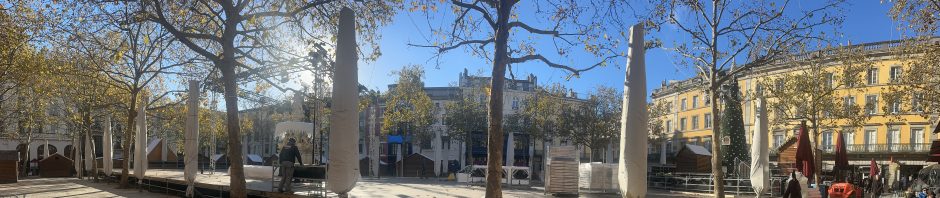


 I do it my way