The plan survives contact with reality (mostly)
Race day
The words that make every other day of the year feel like a rehearsal.

I had, as is my custom, a plan. A proper one. Not the kind scribbled on a napkin at midnight and forgotten by morning, but a real plan — timestamped, sequenced, mentally rehearsed. Years of Le Mans have taught me that the race itself is chaos, so everything leading up to it must be controlled with military precision. The goal: depart by 9:30. The result: departure at 9:30. Some things in this world still work.
The route took us along the B road to Écommoy, which is where the plan encountered its first minor amendment. Three of my companions had, the day prior, purchased Le Mans shirts with the sort of optimism that ignores the fundamental rule of souvenir shopping: check the size. None of the three pairs were correct. A detour to the Super U was therefore not a detour — it was a logistical necessity. The exchange was handled with impressive Gallic efficiency, a few additional items found their way into the basket (as they always do), and we were back on the road without any meaningful damage to the schedule.
From there, the motorway north, the cross-town manoeuvre to avoid the predictable carnage around the official car parks, and then — the secret parking spot. A few hundred yards from a track entrance. My track entrance. I have been protecting this location with the same discretion one reserves for offshore accounts and good tailors. It worked, as it has before. My reputation among the group, carefully cultivated over many years of “trust me on this,” remained intact.
We walked in, crossed the Dunlop Bridge — which Goodyear now insists on calling the Goodyear Bridge, an act of corporate optimism I refuse to dignify — and made our way through the Village, that cheerful labyrinth of merchandise, beer, and overpriced sandwiches that guards the approach to the real business. Our first stop was my preferred establishment, patronised loyally for the past three years. Standards maintained. Beers acceptable. The kind of place that rewards return custom.
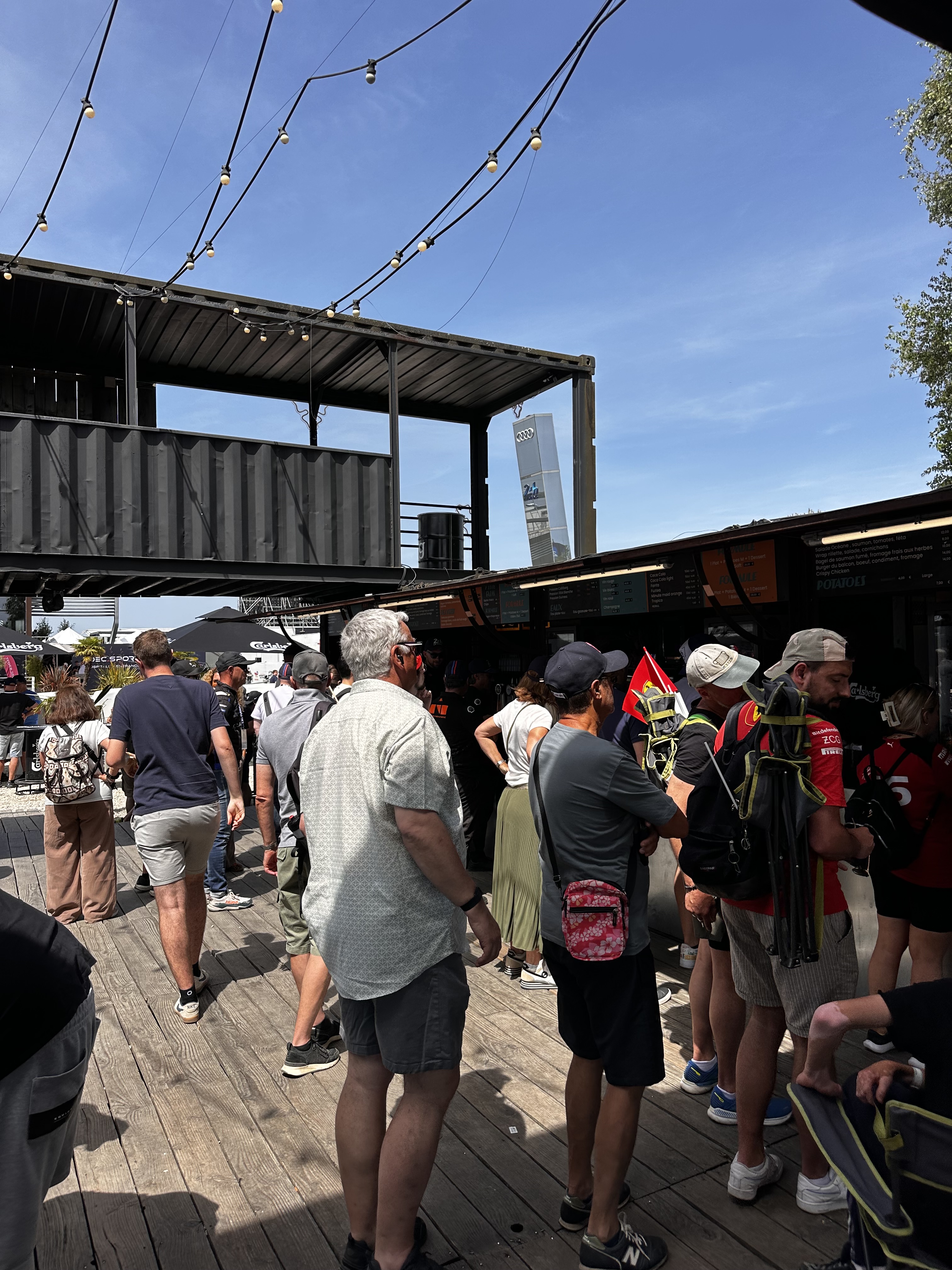
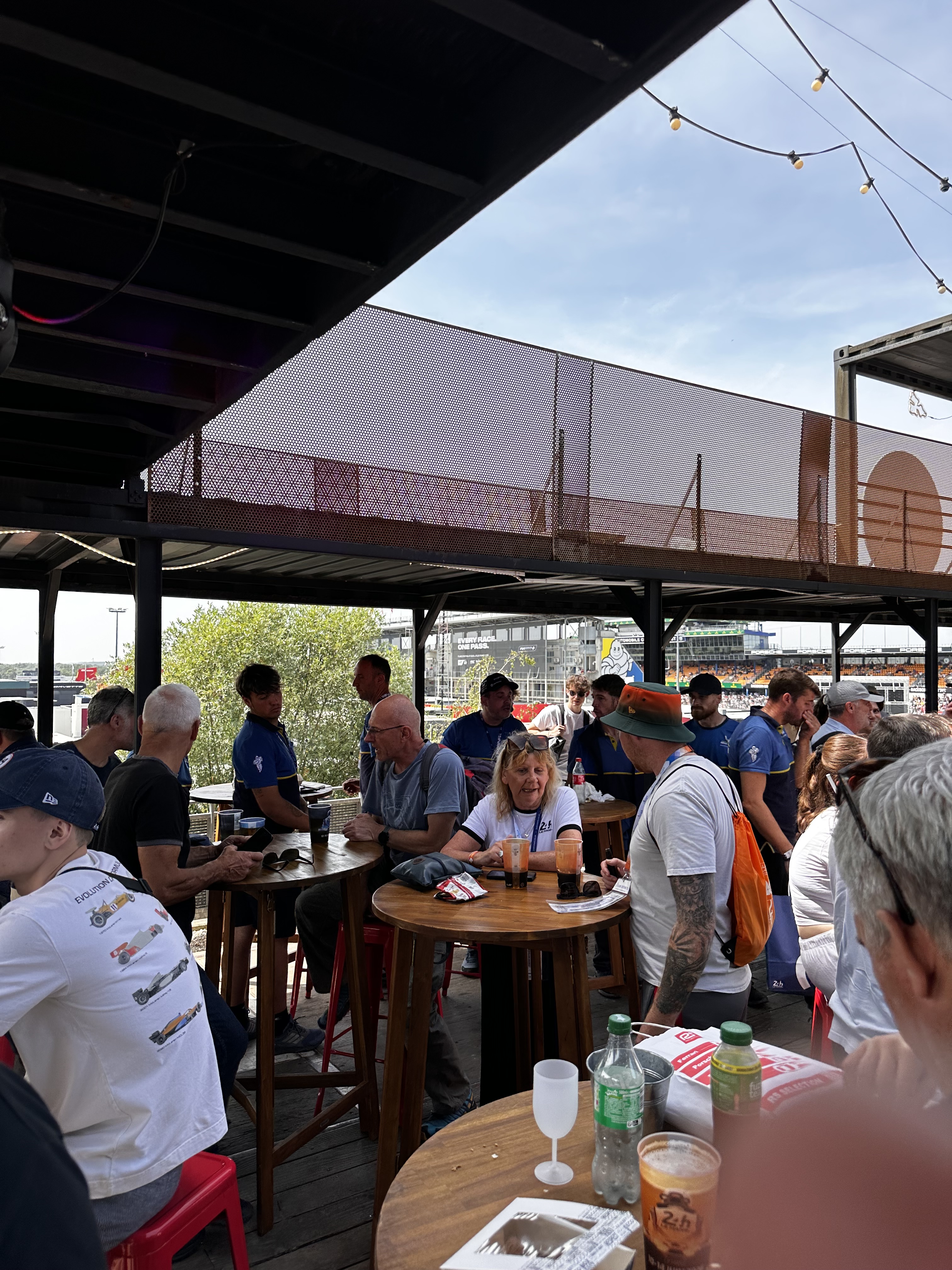
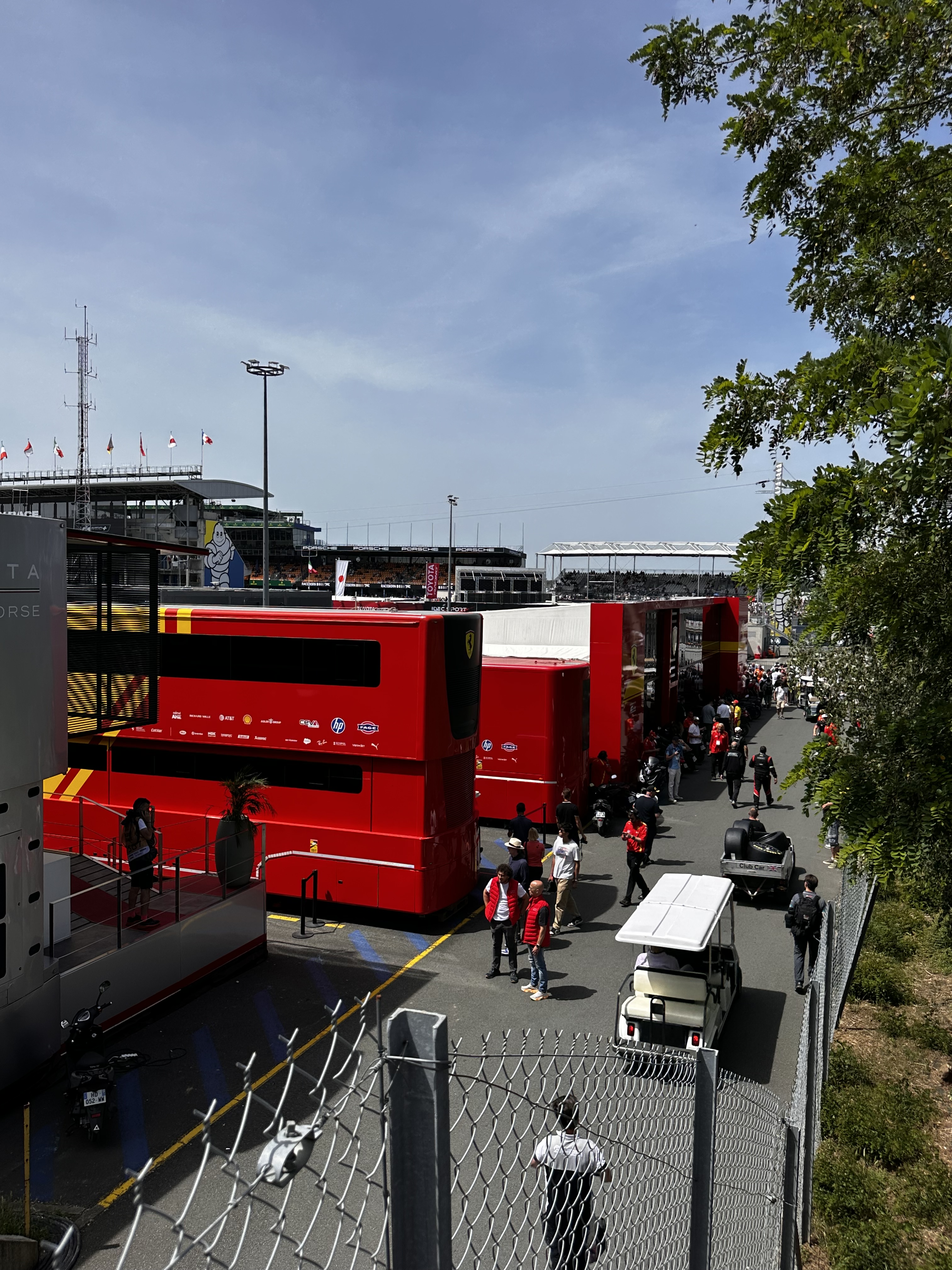
Time moves at its own pace on race day. There was the obligatory diversion into the official ACO shop — I am not made of stone — where I acquired the latest LM24 polo shirt, because some traditions must be honoured. Then the long walk south to T29, our grandstand at the Porsche Curves, drink in hand, the crowds thickening with every step.
By 3pm we were in our seats. One hour to the start. On the large screen opposite, the grid was already assembled — 60-odd cars, mechanics making their final calculations, TV crews searching for faces to point cameras at, the whole magnificent circus on its marks.
The plan had delivered us here, on time, in good spirits, with appropriate refreshments.
Everything else was now up to the cars.
There is something truly electric about the hour before the start. The country hymn rings out and echoes around the circuit, spectators rise to their feet, the trophy is delivered dramatically by paratroopers, and then finally, before the official 4pm start, comes the formation lap — the first chance for the crowd to see all the cars pass at a more modest speed. A few minutes before four o’clock, the cars line up behind the safety car for the starting lap, and then at 4pm precisely, the rolling start is unleashed and the race is on.
It doesn’t matter where you are watching from — you can track the leaders simply by following the TV news helicopters hovering in the sky, and within three and a half minutes, the cars appear. Who will be first? The noise is absolutely deafening, and already a clear gap has opened between the Hypercars and the LMP2s, and again between the LMP2s and the LMGT3s. For me, it is always a serious case of goosebumps.
You then have around three minutes before the cars come around again, and you use the time to learn to tell them apart. Some you can identify by sound alone — the Cadillac and the Aston Martin Valkyrie, with their distinctive naturally aspirated engines, are a classic example. Within six or seven laps, the Hypercars are already catching the LMGT3s, and from that point on it becomes a more or less constant flow of cars passing by.
After a couple of hours — a stretch in which an entire Formula 1 race would have long been over — we decide to make our way back to the main start and finish straight. The crowd has thickened considerably in the meantime, making progress a little slower, with an obligatory stop for another drink along the way. The cars continue to whizz past just a few metres away.
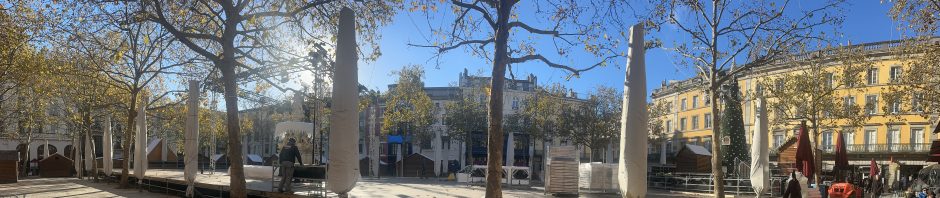
By then, my suggestion of heading back to the car and driving into town to escape the noise and the dust is warmly agreed upon. Less than an hour later, we are sitting in a brasserie right in the heart of Le Mans, on the Place des Jacobins behind the cathedral, enjoying a relaxed dinner outside.
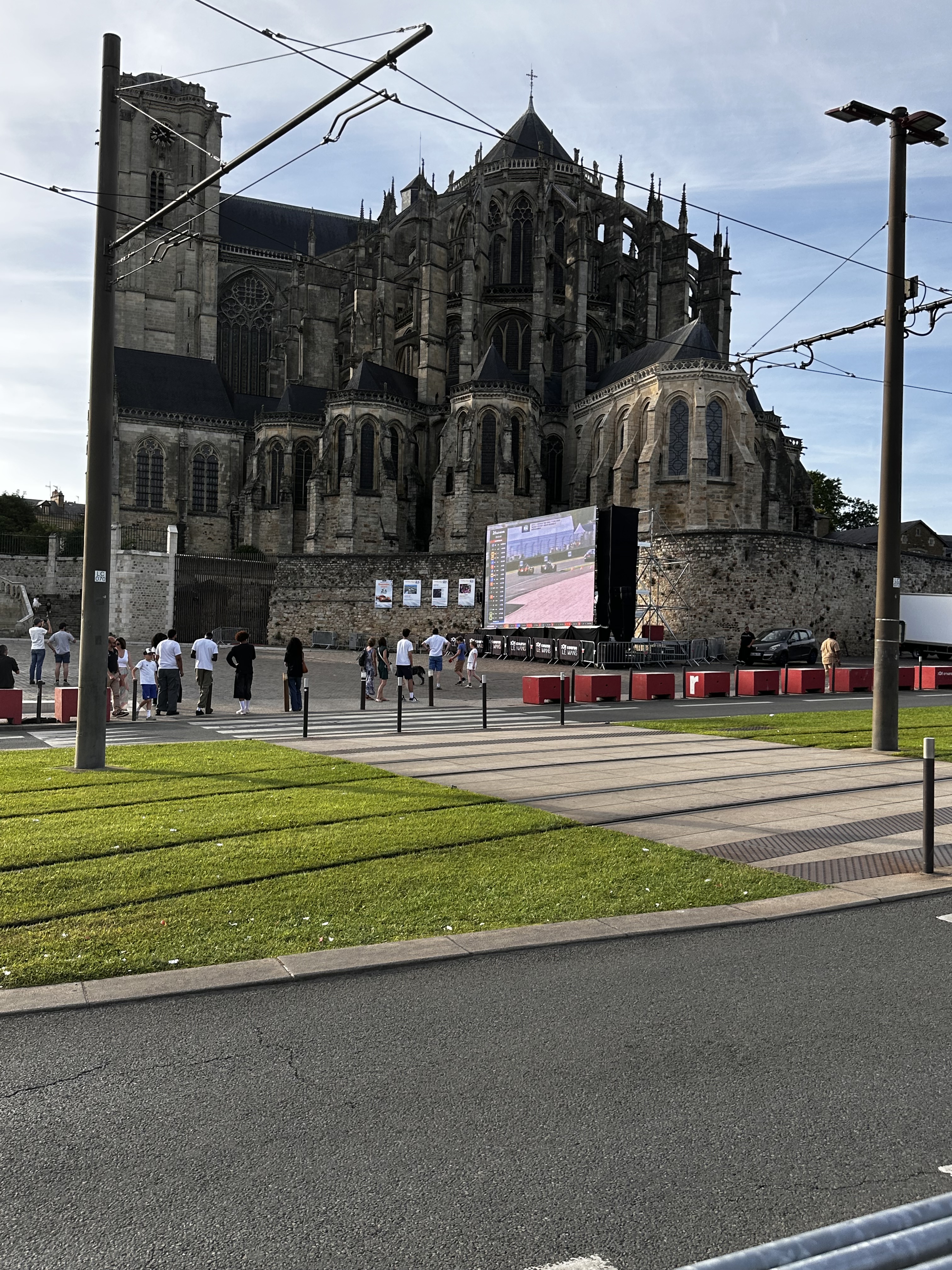
We take our time, and when dusk finally settles over the city, we make our next bold move — back to the car and on to the Arnage corner.
Easier said than done. Every year it feels as though the police have changed the route, and it takes a couple of attempts before we find the right lane. The distant roar of the cars helps confirm we are heading in the right direction. Once parked, it is fully dark, and the 500-metre walk to the track entrance is quite an adventure in itself.
For me, standing on the small hill at Arnage is the finest sensation Le Mans has to offer. Listening to the cars accelerating hard out of Indianapolis and then braking sharply for the tight 90-degree right-hander, all in the pitch dark — and seeing the red glow of the brake discs — is simply impossible to put into words. It is something you must experience for yourself.
Reluctantly, we have to leave by 1am for the almost hour-long drive back to our gîte in La Roche Racan. I am in bed by two in the morning, still buzzing from the day. I open the WEC+ app for a final check on the latest positions before closing my eyes — for what will be a far too short night after an excellent, unforgettable day.


